01Notes
Uses SET’s bodyweight- and sex-adjusted strength standards. In the app, adding height switches on frame-ceiling leveling. Volume from weekly sets can also lift a level when it outruns pure strength — this calculator scores the strength path only.
How strong am I for my bodyweight?
Enter your bodyweight, select the sex used for the comparison, and add a recent set for any of the six yardstick lifts. SET estimates a one-rep max from each set, then places it on its strength level scale. The result is a quick comparison within SET’s model, not a percentile of all people or a competition ranking.
Absolute strength asks how much weight you lift. Relative strength compares performance with a bodyweight reference. Two people lifting the same weight can receive different levels when their bodyweights or comparison profiles differ. Neither measure captures every aspect of fitness, such as endurance, mobility, technique, or skill in a particular sport.
Use the result as a starting point for your own training questions: which lifts have a consistent history, which muscle groups have little recent data, and where would a repeatable benchmark be useful? A score becomes more valuable when you can connect it to actual sets rather than treating the number as a complete assessment of your body.
Which lifts belong in each field?
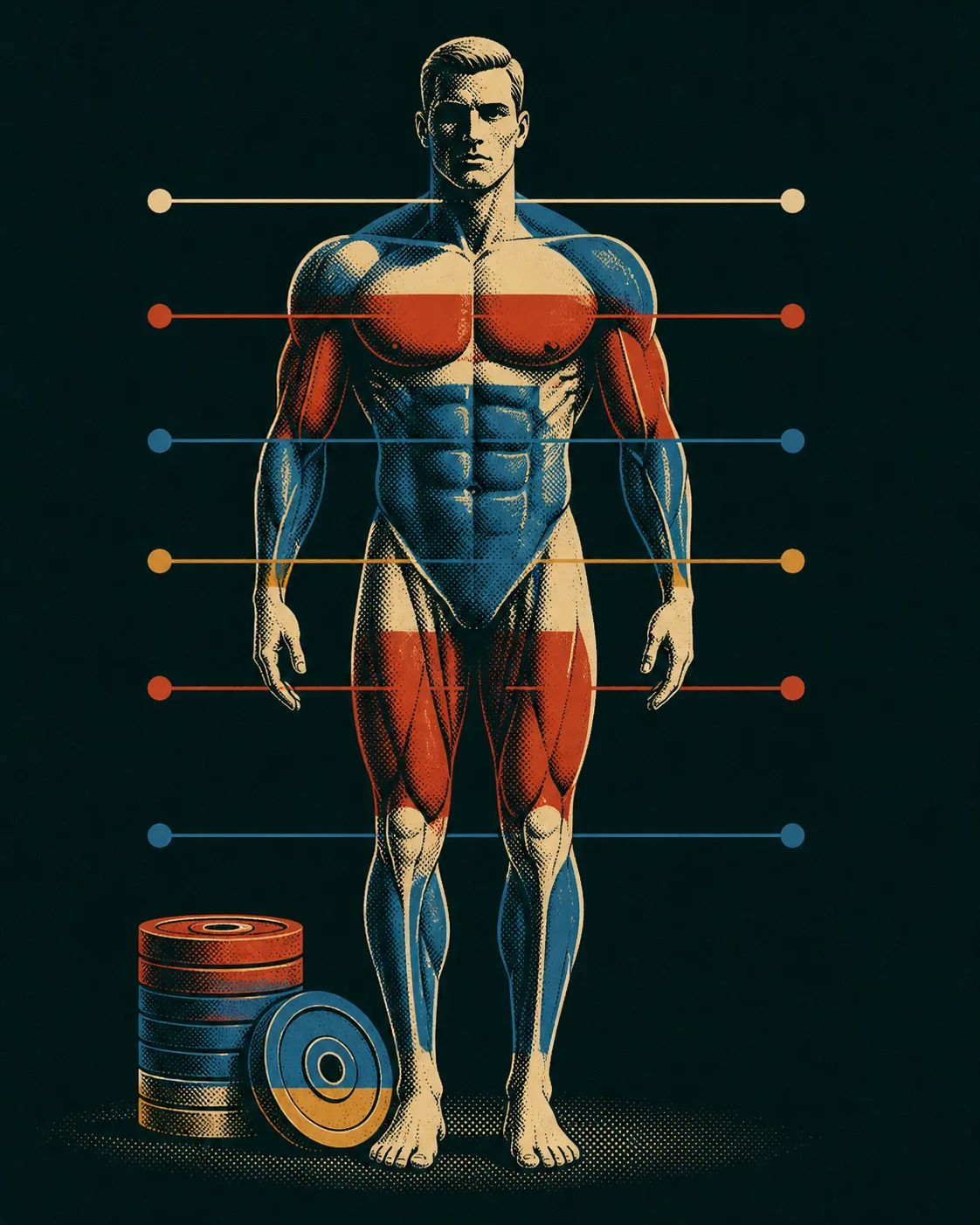
The shoulders yardstick is the overhead press; chest uses bench press; back uses barbell row; arms uses barbell curl; core uses cable crunch; and legs uses squat. These are reference movements for the calculator, not a requirement that every workout contain all six exercises.
Enter the total external barbell load, including the bar. For example, one 45 lb plate on each side of a 45 lb bar means 135 lb, not 90 or 45. Enter completed repetitions from the same set. A recent 135 lb bench press for eight reps produces a 171 lb estimated maximum before SET applies its level calculation.
Do not substitute a dumbbell press into the barbell bench field or a leg press into the squat field. Equipment and movement differences change the meaning of the load. Cable crunch stack labels can also vary with pulley setup; a comparison is most useful when you keep the machine, attachment, range of motion, and technique consistent.
Leave a field blank if you do not have a relevant set. You do not need to attempt an unfamiliar lift just to complete the calculator. The exercise library can help you find movement information, while the strength standards table shows the reference loads behind the comparison.
What the overall level means
The overall result is the rounded average of the muscle levels you supplied. With only chest entered, it is a chest-based result. With all six entered, each contributes equally. An omitted muscle is excluded rather than assigned zero. This keeps missing data from being mistaken for a measured weakness.
For a simple arithmetic example, muscle levels of 20, 30, and 40 average to 30. Adding a fourth result of 10 changes the average to 25. That lower overall number does not mean the original three lifts got worse; it means the comparison now includes another muscle. Compare like-for-like coverage when reviewing results over time.
A high chest result and a lower legs result can be a reason to review your training history, but they do not diagnose an imbalance or prescribe how many extra sets to do. The difference may reflect experience with the selected lifts, exercise technique, or incomplete data. Check the inputs before changing your plan around the output.
Why the app may show a different level
This page evaluates the strength path from the sets you enter. The app can use additional information, including height-based frame-ceiling leveling and recent training volume. Because the inputs and paths differ, matching a single web result to an app level is not always expected. The calculator is a focused snapshot, not a full account sync.
Estimated strength also has uncertainty. The formula caps repetitions at 12 and returns the load itself for a single. High-rep sets, differing effort, or altered technique can change how well the estimate describes your actual single. Read the 1RM calculator guide for worked examples and the limits of percentage-based estimates.
For a useful recheck, keep the exercise, equipment, range of motion, and effort comparable. Save the date, bodyweight, load, and reps alongside the level. Improvement can also mean cleaner repetitions or completing the same work with better control, even when the displayed level does not move. Use the score to summarize training, then return to the actual workout record to understand what changed.